Goals, initiatives and ideas
Capture direction, run initiatives, and take ideas in. Link them so the organisation can see what supports what.
The model
Takt keeps direction and delivery in one graph. Each role opens a different page. The links stay the same.
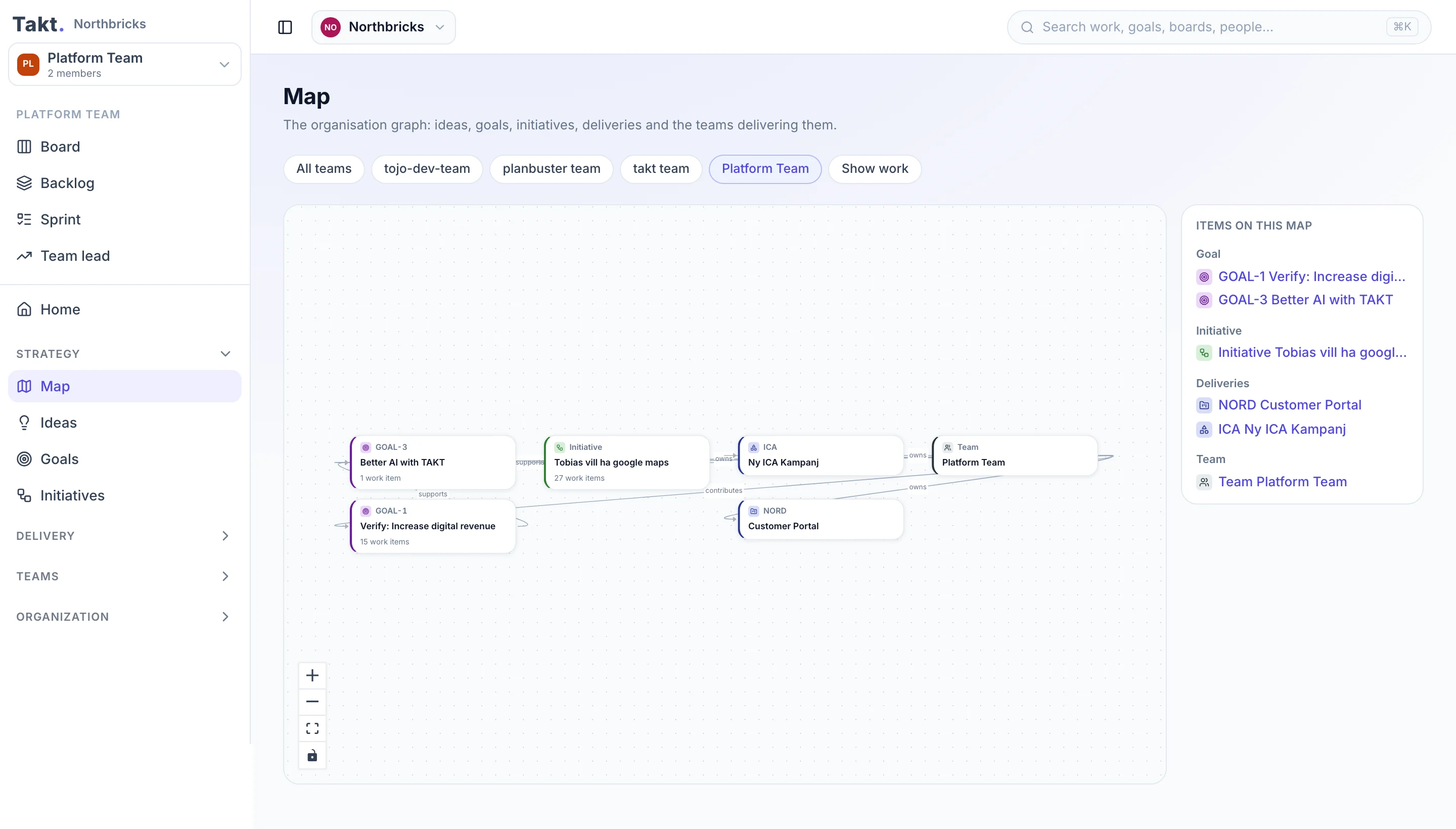
An idea can become a goal or work. Goals support other goals. Initiatives and deliveries support goals. Teams deliver through deliveries — projects and services. Work items can support a goal and sit on an initiative.
These are first-class parts of the product, not a slide about the future.
Capture direction, run initiatives, and take ideas in. Link them so the organisation can see what supports what.
See ideas, goals, initiatives, deliveries and teams on one map built from the work items underneath. Work nodes stay off by default so the picture stays readable.
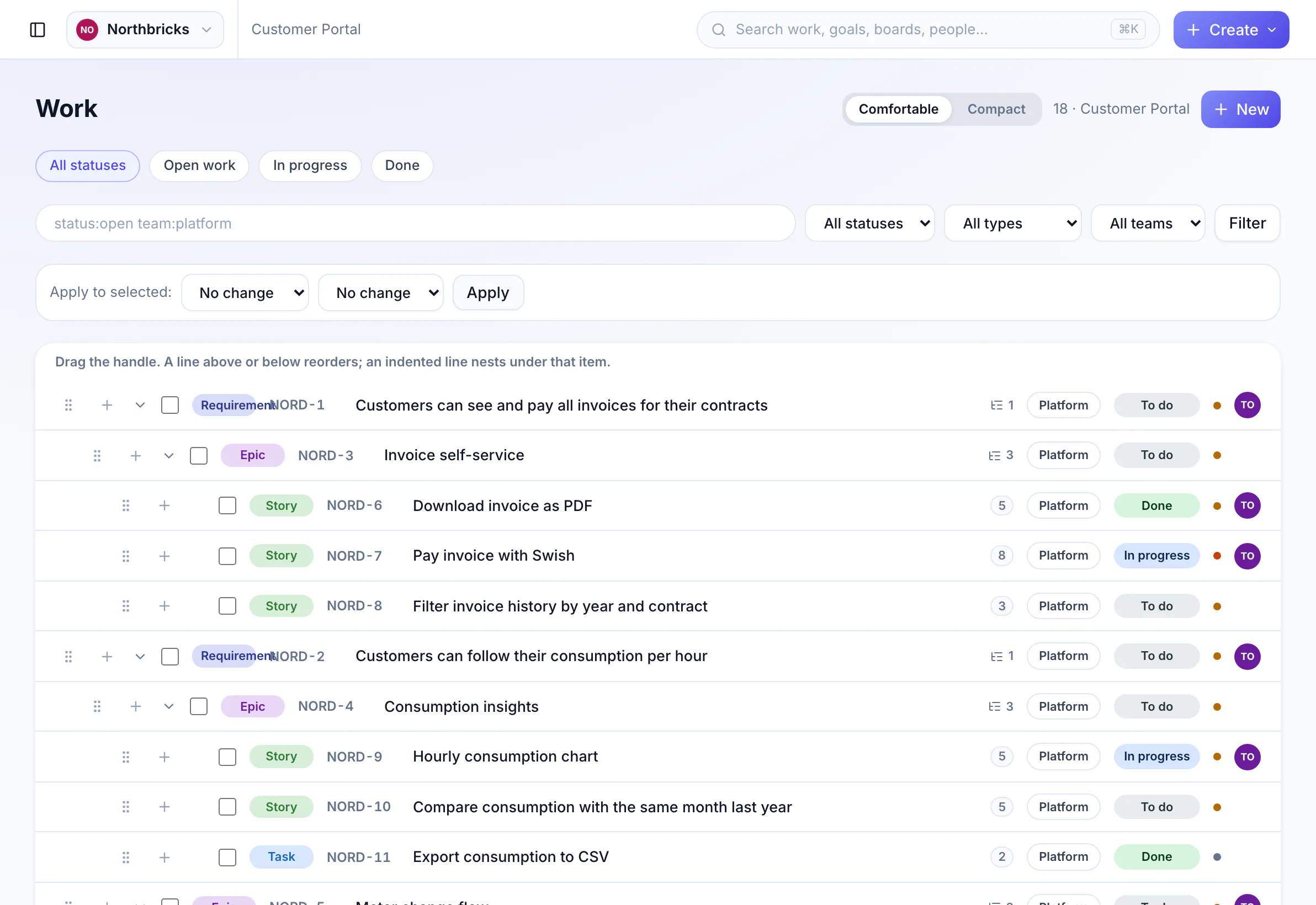
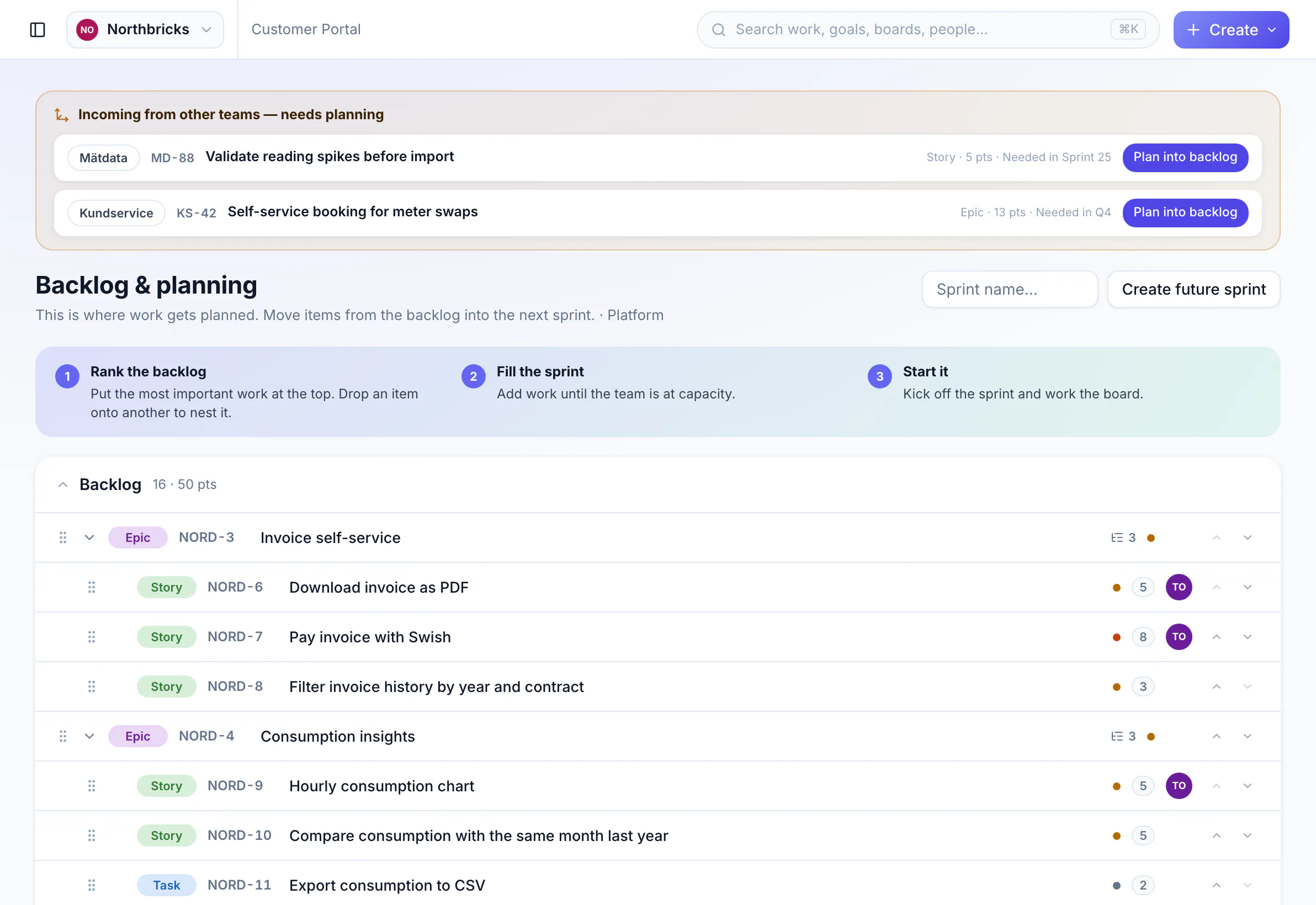
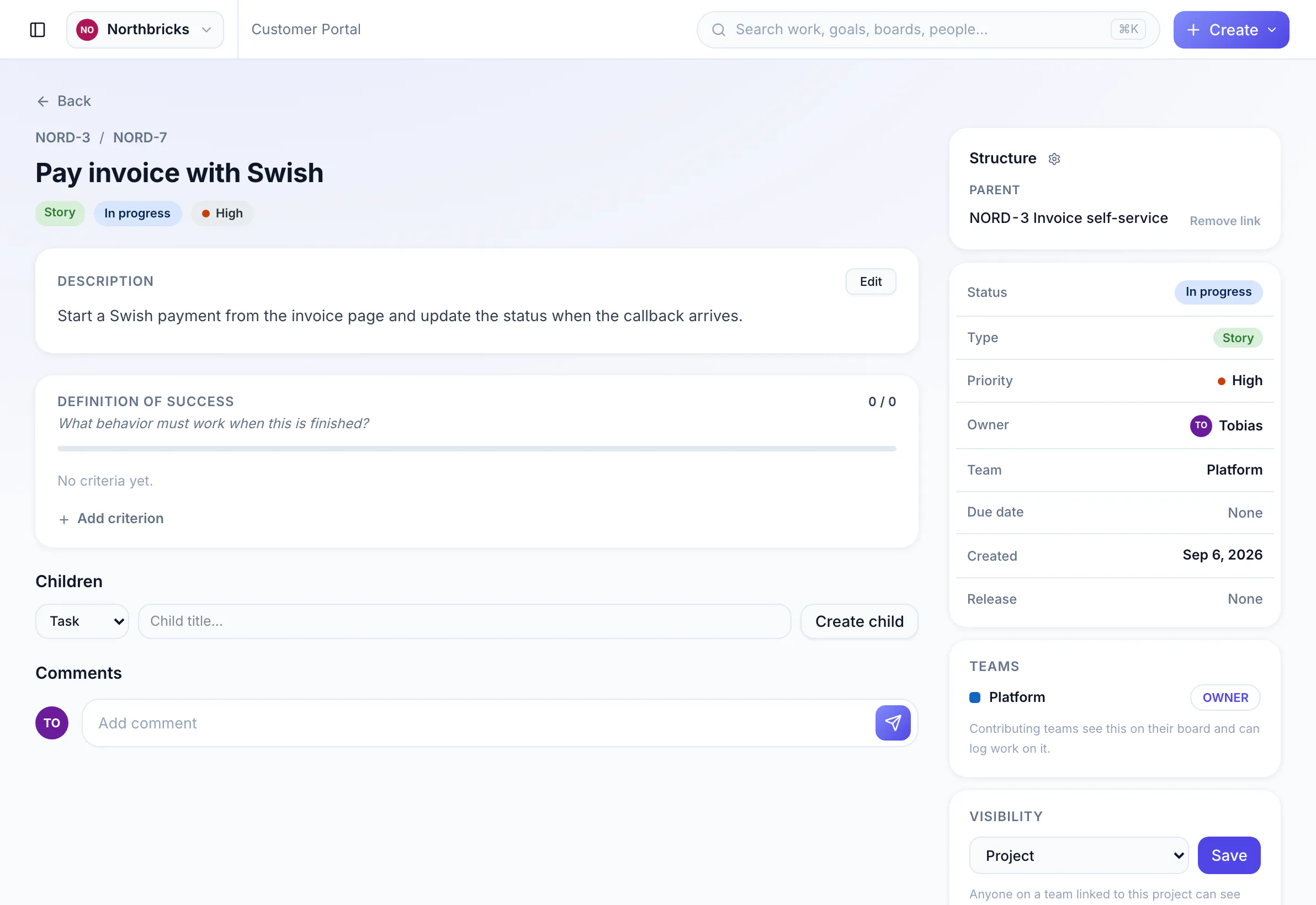
A delivery is a project or a service with its own key, board and backlog. Standing teams plan and move work at three altitudes — epics, features, stories. Sprints are optional. A requirement is a work type, with a definition of success on the item.
Sprints, initiatives and goals sit in a side panel. Drag a row onto one and the link is saved on the work item — the same link the map draws.
A team sketches outcome, scope and open questions in one place, then turns the sketch into goals, initiatives and work that stay linked to it.
Organisation labels for everyone, team labels for the team. Colour them, put them on work, filter the board by them.
One agent across the product, scoped to the page you are on. Pick a skill or ask in plain words: improve a description, break a feature into stories, turn an idea into a goal. Every change is a proposal a person approves. Admins set a monthly token cap and see usage per team.
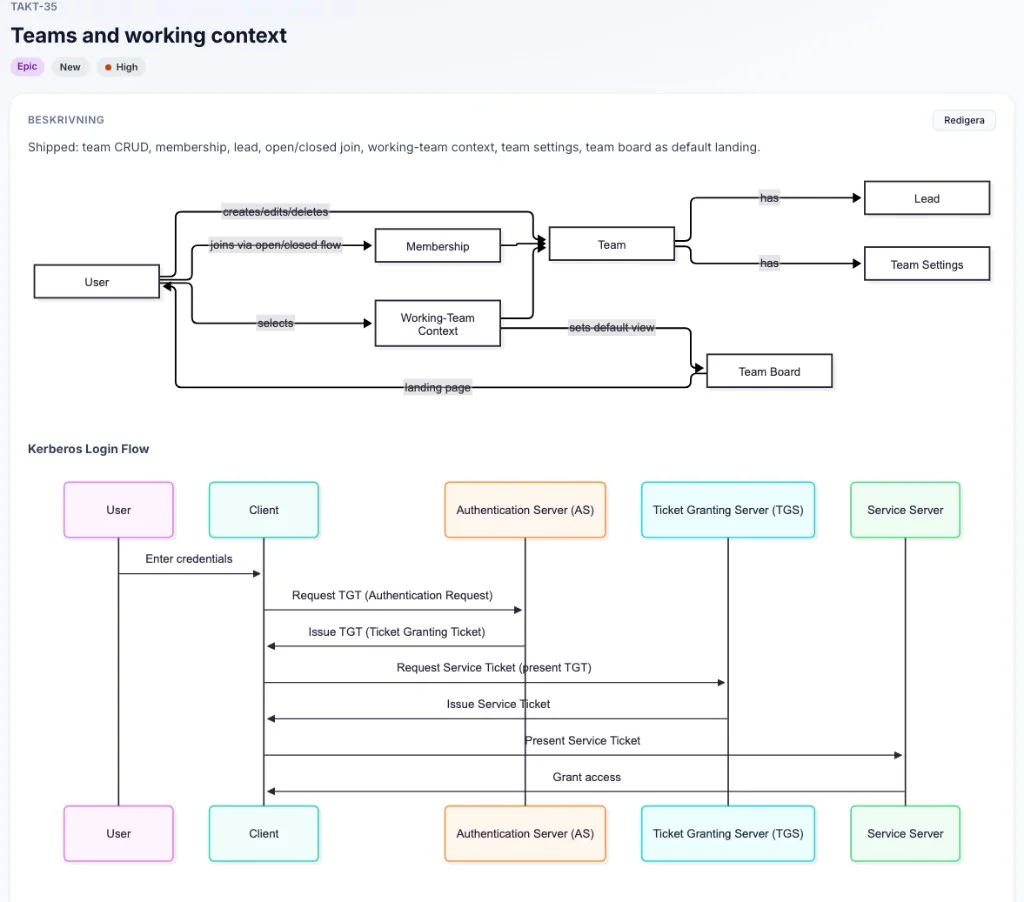
Flowcharts and sequence diagrams live in markdown on work items, goals and ideas. Write them yourself, or ask AI to insert one. The same fences render in comments.
Goal progress is set on the goal today. We do not invent a percentage from child work.
Decisions and requirements live on the work item now; a wiki is later. A work item can point at its pull request today. Live sync from GitHub, GitLab or Azure DevOps Server is still coming — Takt does not replace git. Sign-in with Microsoft Entra ID and authenticator MFA are in the product; other identity providers are later.
The agent drafts and links work. Unlinked-work detection and voice input are not in the product yet.